$
Fund what matters
Put recurring property income toward ministry, staff, maintenance, outreach, or reserves.
Practical stewardship. Wider impact.
The same room that sits quiet most of the week can help fund ministry, create local work, and support more efficient delivery across the surrounding community.
Put recurring property income toward ministry, staff, maintenance, outreach, or reserves.
Active hubs create paid operational roles close to the neighborhoods they serve.
Bring everyday deliveries closer to their final destination using infrastructure already in the community.
Create new value without selling the property or asking church staff to run another program.
We grew up as pastors' kids, watching churches carry enormous responsibility for their communities while valuable parts of their properties sat unused. ChurchSpace exists to help close that gap.
You keep ownership and approve the dedicated space.
We manage setup and operations so your team does not.
Your ministry earns income from space you already have.
Neighborhood distribution, in plain language
Many everyday goods travel through large facilities far outside the neighborhood before reaching someone's front door.
ChurchSpace prepares and operates small, local distribution hubs inside suitable church properties. A dedicated room can be used to receive, organize, stage, and hand off parcels closer to their final destination.
It is not a public storefront, a new ministry program, or another responsibility for your staff. It is a professionally managed use of agreed, dedicated space.
See exactly how the process works.
ChurchSpace helps churches use underutilized property for neighborhood distribution, creating new income for ministry while helping goods move more efficiently across their communities.
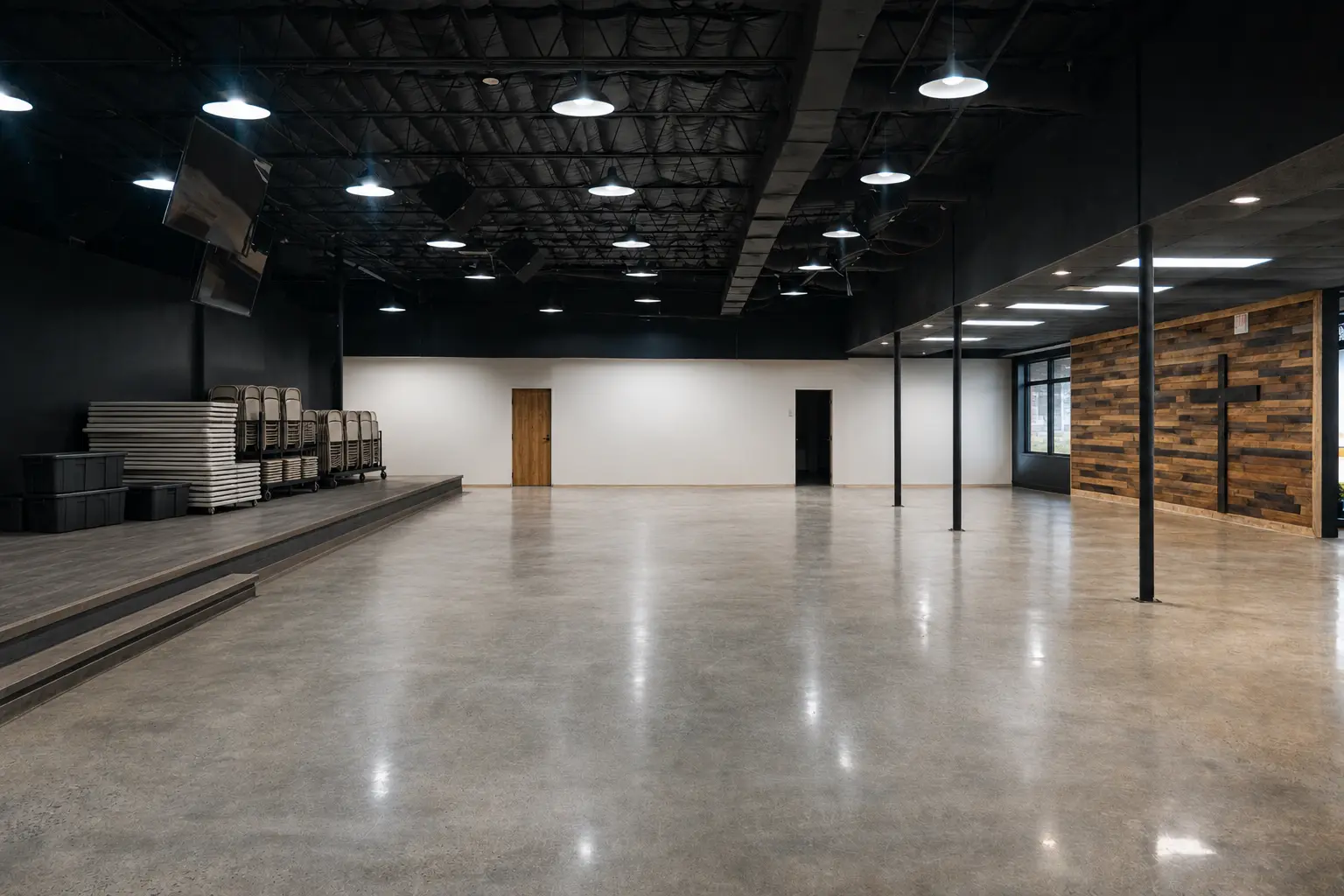
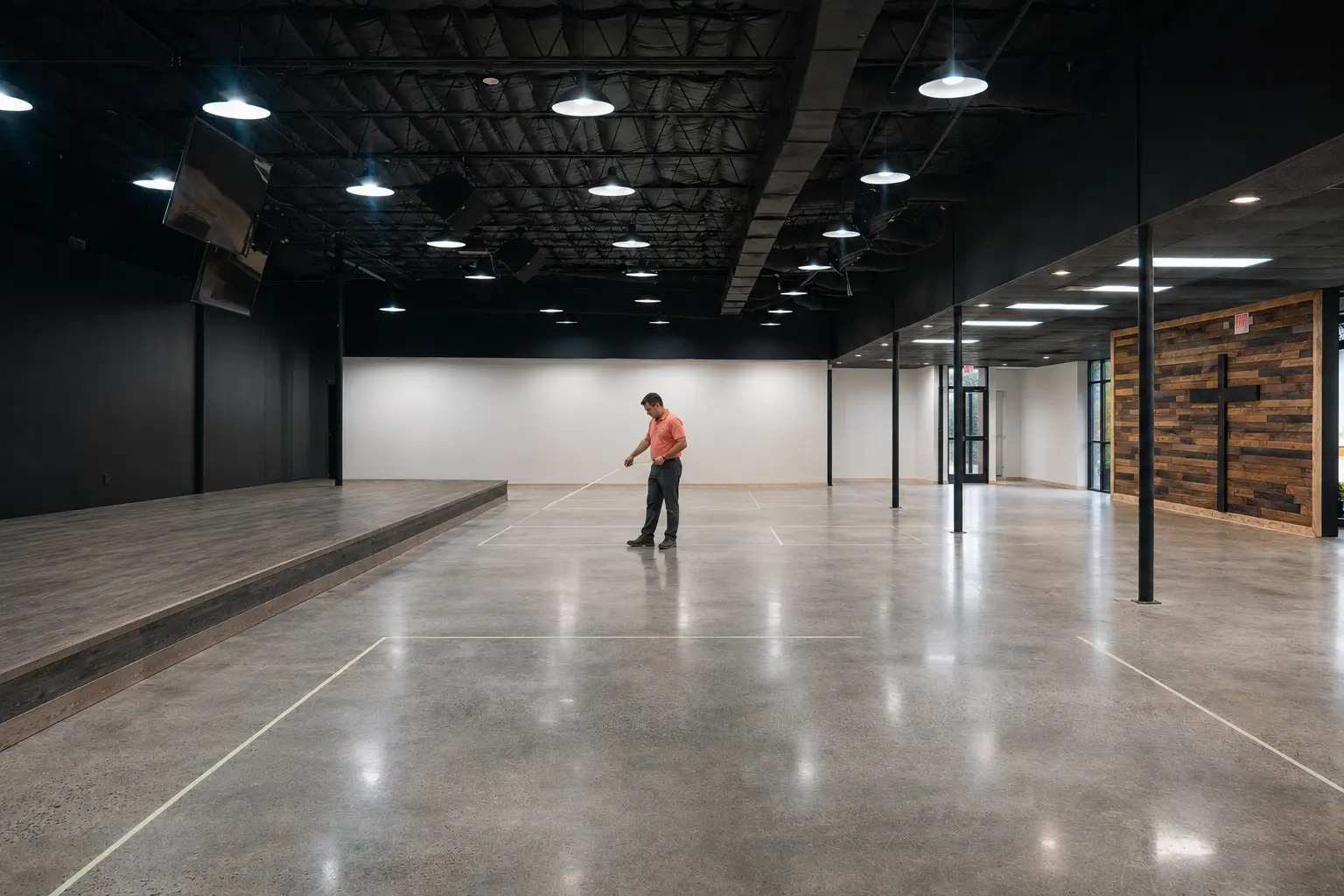

Explore
We start with a conversation, photos, and a walkthrough. The room does not need to be cleared, renovated, or in its final state.
Prepare
ChurchSpace documents access, parking, layout, and operating boundaries, then develops a clear site plan for your team.
Activate
Once the site, agreement, and enterprise use are aligned, ChurchSpace coordinates launch and runs the hub day to day. A typical site may move 1,000+ small parcels through the space daily.
A useful change, with clear boundaries
What changes
What stays yours
Site-specific earning potential
Sustainable income from property your church already owns, without adding a new program for your staff to manage.
Actual compensation depends on the size and suitability of the dedicated space, package volume, market, and operating use. Your site-specific economics are presented before any agreement.
Is your church a fit?
A room does not need to look perfect today. We first determine whether the property has the right fundamentals and whether the model makes sense for your church.
Tell us about your church Most churches start with photos and a short introductory call.Typically 1,500 to 10,000 sq ft, with 3,000+ sq ft ideal.
At least 10 parking spaces, with easy ground-level entry.
Receiving doors, ramps, or loading access are helpful.
The space can remain dedicated during agreed operating periods.
Questions leadership teams ask
These are the questions pastors, trustees, property teams, and boards should ask before moving forward.
A dedicated room can support neighborhood distribution uses such as parcel staging, sortation, pickup and delivery, returns, or seasonal overflow. A typical active site may handle more than 1,000 parcels per day, primarily poly mailers and shoebox-size boxes. The exact use and expected volume are defined before activation.
ChurchSpace coordinates setup, staffing, day-to-day operations, and the relationship with the enterprise partner. Your church provides the agreed space. Your staff is not responsible for running the hub.
The operating footprint is dedicated and clearly separated from worship and ministry areas. Access, hours, parking, and movement through the property are documented with your team before launch.
Every site receives an operating plan with defined access points, security procedures, site rules, and appropriate insurance requirements. Nothing begins until the space and operating boundaries are clear.
Compensation is based on the size and suitability of the dedicated space, package volume, market, and operating use. ChurchSpace presents the site-specific economics before any agreement, including what is fixed and what may grow with activity.
No. Your church retains ownership of the property and approves the dedicated footprint before activation. ChurchSpace manages the agreed operational use within that space.
Built for a group decision
Your pastor should not have to translate a technical operations model to the board alone. ChurchSpace helps your team evaluate the opportunity together with clear visuals and site-specific answers.
A conversation, not a commitment
We'll learn about your property, answer your team's questions, and help determine whether the space may be a fit for the ChurchSpace network.
No cost to explore. Your church remains in control.